Understanding Shot Types
Understanding different shot types is extremely important when filming. To undestand these shots, means to be able to select and work with them in an effective way depending on what style and tone you want to create.
 Extreme long shot's are great for establishing the location and capturing what's going to be in the scene. Extreme long shots often show landscapes which will allow for the audience to become aware of the change of scenery/time.


Extreme Close-Up
 Extreme Close-Up's are often on characters eyes. This creates an intense and intimate effect with the audience and the characters as there is a direct mode of address. The character is looking straight into the audience members eyes. The eyes are an extremely expressive part of the face so it is useful when determining how someone is feeling.
Low Angled Shot
 Low angled shots are often taken as a point of view shot from the 'victim'. Here we see the 2 characters after they have just tortured a Nazi. The Nazi being on the floor, the shot is low angled, looking up at the more powerful characters. This is an effective way to establish who holds the power in the scene. It also puts the audience in a powerless position as they are unaware of who or what the characters are looking at or what they have done.

High Angled Shot
 This angle is often used with children to make them appear weaker than the adult they are talking with. The use of the high angled shot here makes Matilda appear afraid and weaker than the person she is talking to. This enables the audience to feel sympathy for her as she is portrayed as vulnerable.
Eye Level & POV shots

 POV shots are taken from the vision of one character as they observe a scene, person or object. Here we are physically inside the character and thinking and acting as them. This is an interesting shot as it can cause the audience to feel a stronger sense of sympathy and connection towards the character they are within. It also puts them at a vulnerable position as they have no control over what they do. Scenes using this technique with a character talking to the subject will appear more direct and important as the audience will feel a stronger connection.


Extreme Long Shot
Extreme long shot's are great for establishing the location and capturing what's going to be in the scene. Extreme long shots often show landscapes which will allow for the audience to become aware of the change of scenery/time.
These shots are also commonly used before a battle scene in films. The shot allows for the audience to familiarise themselves with a lot of people in a short space of time. This technique also adds drama to the piece as you are either focused on one thing in the scene alone, or many things all at once.
Long Shot
This shot also establishes location and period, however it is more intimate, allowing for the audience to become familiar with the characters. Whereas the extreme long shot is more useful for establishing location, long shots are more commonly used when the location and characters are introduced together.
Mid Long Shot
Mid long shots are used when both the location and characters are working together and both need focus in order to capture the right atmosphere. Here we are able to see our character but also where they are and what they are doing. Both have equal focus, enabling them to work together to create a cold and dark atmosphere. We are close enough to see the characters facial expression and far enough away to see what's going on around them.
Mid Shot
Mid shots are often used when the location has already been established and the focus can shift to the characters. Mid shots are often used when two characters are involved in a scene, if there are more than 2 characters that need focus on them, the shot will probably change to a mid long shot.
Mid shots build upon the intimacy with the audience and the characters without it becoming overbearing or intense.
Close-up
Close-up's are often used to emphasise a characters emotions. Having their face take up most of the shot makes it easier for the audience to recognise the feelings and emotions of the character. This close up of Jack Nicholson in The Shining is an iconic example. The shot portrays the characters mad energy, his mouth snarling, his eyes glaring and his face framed between the pieces of wood making up the door, making it impossible to escape his rampage. The closeup has been used to overwhelm you and frighten you; paired with the classic line "Here's Johnny", heightening tensions and fear.
Extreme Close-Up
Low Angled Shot
Low angled shots are often taken as a point of view shot from the 'victim'. Here we see the 2 characters after they have just tortured a Nazi. The Nazi being on the floor, the shot is low angled, looking up at the more powerful characters. This is an effective way to establish who holds the power in the scene. It also puts the audience in a powerless position as they are unaware of who or what the characters are looking at or what they have done.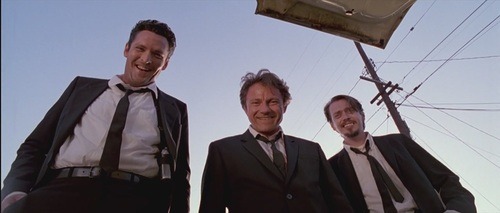
High Angled Shot

Eye Level & POV shots
These shots are taken from the eye level of the character in shot. This creates the effect that we are connected and thinking as this character. This shot is often used when narration is played and we can hear the characters thoughts. This acts as a powerful tool in connecting and understanding the character.
 POV shots are taken from the vision of one character as they observe a scene, person or object. Here we are physically inside the character and thinking and acting as them. This is an interesting shot as it can cause the audience to feel a stronger sense of sympathy and connection towards the character they are within. It also puts them at a vulnerable position as they have no control over what they do. Scenes using this technique with a character talking to the subject will appear more direct and important as the audience will feel a stronger connection.
Worm Eye View

These shots also often use POV shots. These shots are useful when establishing power, similar to the low angled shot. They are a great way of manipulating scale and space as they make the surrounding objects seem ridiculously big. This works when attempting to disorientate the audience.
Birds Eye View

Birds eye view shots can be used to establish location and to emphasise height. Like the worms eye view shot, it plays with the scale of things. Here we see 3 people, yet they are made to look very small in the way that the camera is angled. This shot also builds confusion and excitement as we don't know what these characters are looking at until the shot changes.

Comments
Post a Comment